- IMGs averaged 86 internal medicine applications each in 2026.
- AAMC data show a point of diminishing returns: after it, extra applications add very little.
- Your odds depend more on which programs you choose than on how many.
- Filter by visa sponsorship, year-of-graduation limits and score cutoffs first.
I understand the fear behind "apply to 200 programs." But fear is expensive. Let's spend your money where it actually buys interviews.
The most common fear we hear: "If I don't apply to 200 programs, I won't match." The data say something calmer. More applications help, but only up to a point. After that, every extra application costs money and time and adds almost nothing.
What "diminishing returns" means
The AAMC studied how the chance of matching changes with each extra application. In every specialty there is a point after which one more application barely changes your odds. That point depends on your specialty, your scores and your applicant type.
An application to a program that never interviews people like you is not a chance. It's a donation.
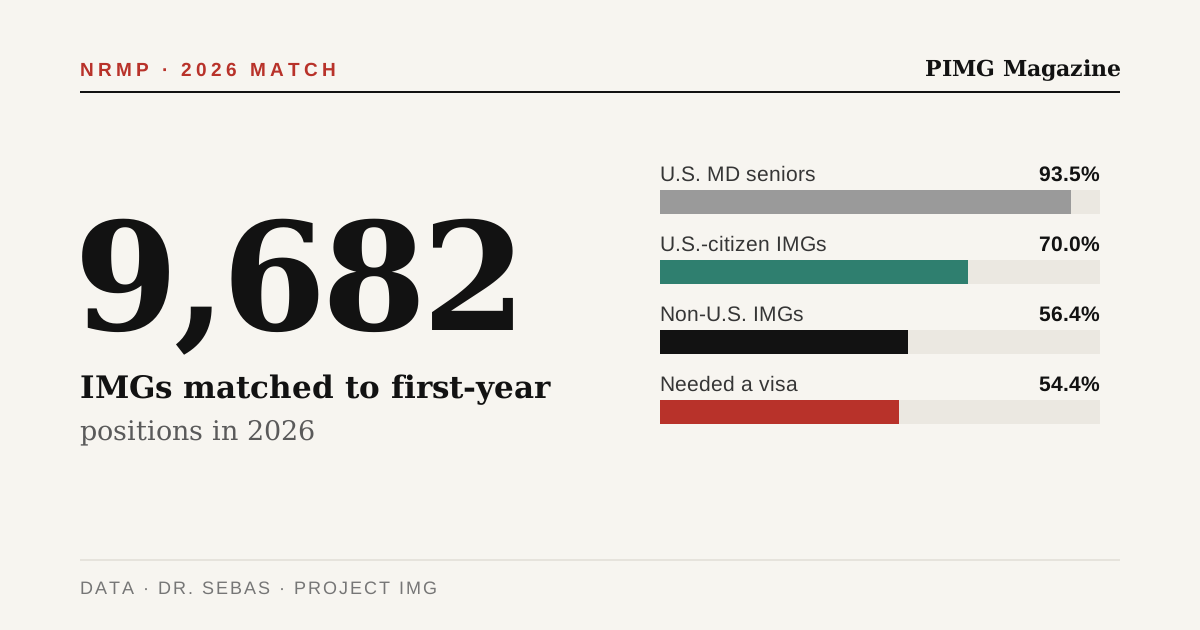
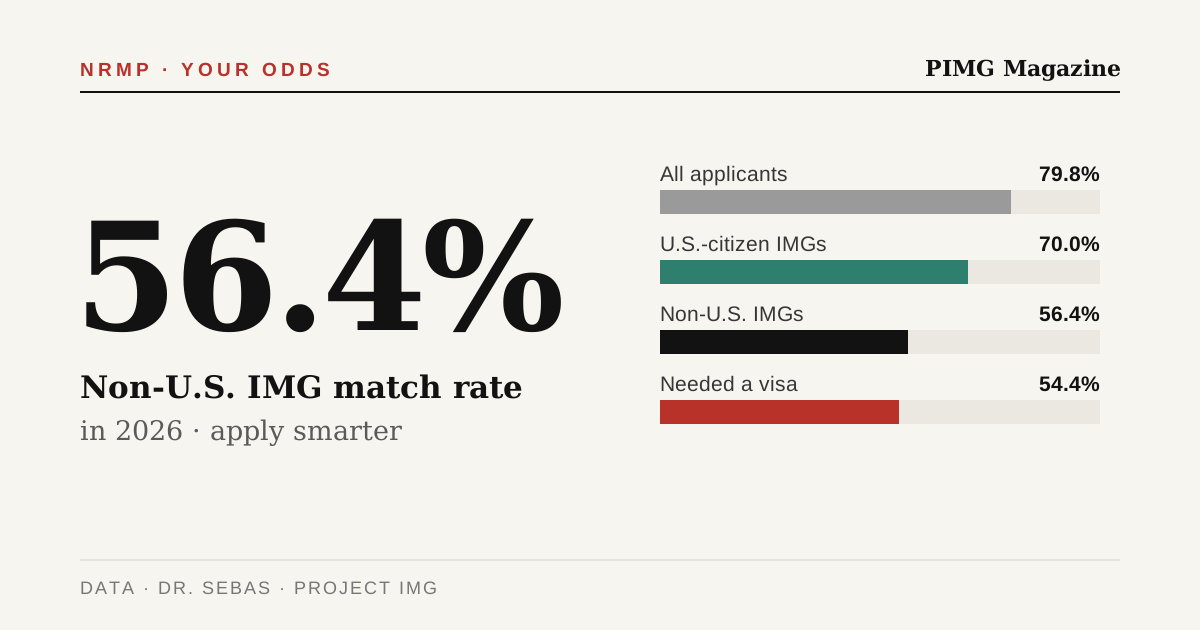
Who matched in 2026: PGY-1 match rate by applicant group
Same algorithm, very different odds. The visa is now the biggest gap for non-U.S. IMGs.
Build your list in four filters
- Visa: if you need sponsorship, keep only programs that sponsor your visa type.
- Graduation year: many programs only consider graduates from the last 3–5 years. Check each program's website.
- Scores and attempts: some programs list minimum scores or don't accept failed attempts.
- IMG history: look at the current residents. Programs with IMG residents from your region are a good sign.
Non-U.S.-citizen IMG applicants keep growing
Active applicants rose 51.9% between 2022 and 2026, while their match rate fell to 56.4%.
Then spread the risk
| Tier | What it means | Share of your list |
|---|---|---|
| Reach | Strong programs where your profile is a stretch | About 15–20% |
| Target | Programs where residents look like you on paper | About 50–60% |
| Safety | Programs that take many IMGs and sponsor your visa | About 25–30% |
✅ Do
- Use your program signals on programs that really fit
- Apply in your first week, on time
- Track every application in a spreadsheet
- Add a second specialty only if you'd truly train in it
❌ Don't
- Apply to programs that say "no IMGs" or don't sponsor your visa
- Spend your whole budget on reach programs
- Assume more applications fix a weak application
- Forget the cost of ERAS fees per program
Your step-by-step plan
- Download a list of programs in your specialty.
- Remove programs that don't sponsor your visa or don't take your graduation year.
- Mark programs with current IMG residents from your region.
- Split the rest into reach, target and safety.
- Use your signals on the programs that fit you best.
- Submit early and track everything in a spreadsheet.
Common mistakes to avoid
- Applying everywhere without reading program websites.
- Putting all your signals on reach programs.
- Spending your budget on a second specialty you don't want.
- Applying late.
💡 Dr. Sebas’s tip
Before adding any program, open its website and check three things: visa, graduation year and IMG residents. If one says no, delete it. You just saved money.
Frequently asked questions
Is there a magic number?
No. It depends on your specialty, scores, visa and USCE. Use AAMC and NRMP data for your applicant group.
Should I apply to two specialties?
Only if you'd truly train in both, with a separate, honest personal statement for each.
Do signals really help?
Programs that accept signals use them to choose whom to interview. Use them for programs where you truly fit.