- Structure every answer: situation, what you did, the result, what you learned.
- Have a 60–90 second "tell me about yourself" that ends with why this specialty.
- Explain gaps or attempts honestly and briefly, then show what changed.
- Programs may not ask how you will rank them. You don't have to answer if they do.
An interview invitation means they already believe in your scores. Now they want to meet the person. So let's make sure the person they meet is you, at your best and most natural.
For an IMG, an interview invitation means the program already believes your scores and experience are good enough. The interview checks something else: whether they'd enjoy working with you at 3 a.m. You're not being tested on medicine. You're being tested on communication and judgment.
The 8 questions
1. "Tell me about yourself."
60–90 seconds: where you trained, one experience that shaped you, why this specialty, and what you're looking for in a program. Practice it until it sounds natural, not memorized.
2. "Why this specialty?"
One real patient story, then what you love about the daily work. Avoid "I've always wanted to…" with no example.
3. "Why our program?"
Mention two specific things: a clinic, a track, the patient population, a faculty member, what the residents said. Generic praise sounds generic.
4. "Tell me about a time you made a mistake."
Choose a real but manageable mistake. What happened, what you did right away, and the system or habit you changed afterward.
5. "Tell me about a conflict on your team."
Show that you listen, talk directly, put the patient first and know when to escalate. Never blame.
6. "How will you adapt to the U.S. health system?"
Use your USCE: the EMR, the team structure, talking with patients about shared decisions. Show that you've seen it, not only read about it.
7. "Explain this gap / attempt in your application."
Two or three sentences, honest and without drama, then what you did and why it won't happen again. Then stop talking.
8. "Do you have questions for us?"
Always yes. Ask about the residents' wellness, how they support IMGs, visa sponsorship, and what graduates do afterward.
Good answers are specific, short and end with what you learned.
Virtual interview setup
- Camera at eye level, light in front of you, plain background
- Wired internet or a phone hotspot as a backup
- Notes with the program's details just under the camera
- Test the platform the day before
✅ Do
- Practice out loud with a timer
- Record yourself once and watch it
- Send a short thank-you note only if your specialty allows it
- Write notes on each program right after the interview
❌ Don't
- Read from a script
- Speak badly of your home country or previous programs
- Ask about salary first
- Promise a program you will rank it #1
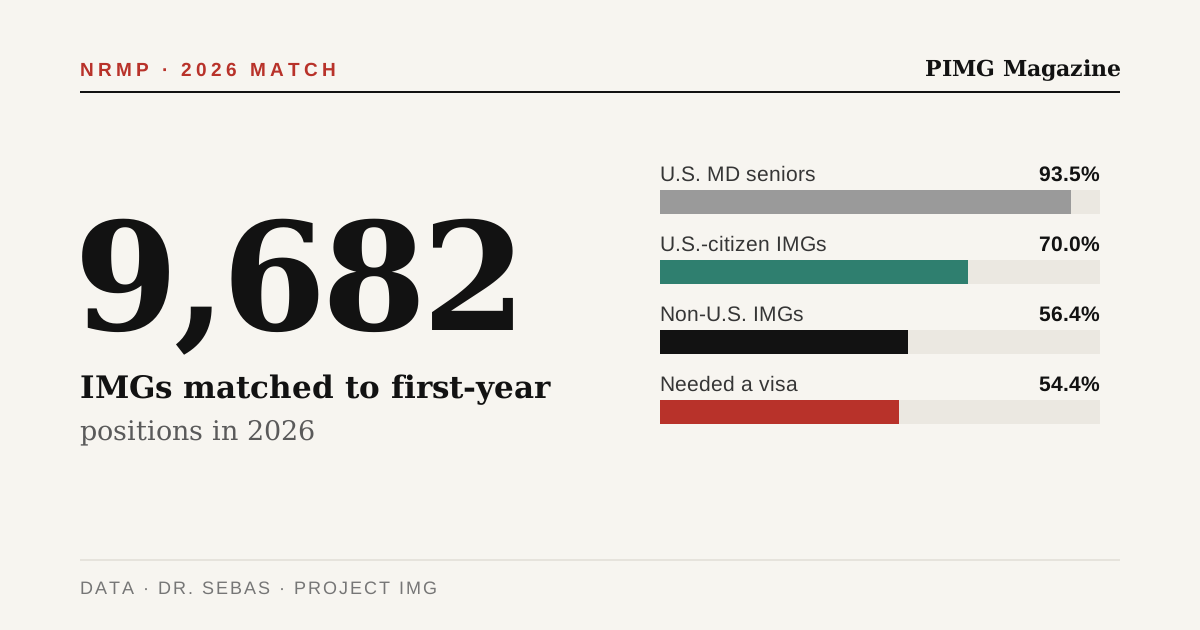
Non-U.S.-citizen IMGs: match rate with and without visa sponsorship
In 2026 the gap was 13.5 points. Target programs with a real record of sponsoring your visa type.
Your step-by-step plan
- Write bullet-point answers (not scripts) for the 8 questions.
- Prepare 3–4 stories from your clinical work that show different strengths.
- Do two mock interviews with a friend or mentor.
- Research each program for 20 minutes before its interview.
- Prepare 3 questions for the program and 3 for the residents.
- After each interview, write your impressions the same day.
Common mistakes to avoid
- Memorizing answers word by word.
- Talking too long. Aim for 1–2 minutes per answer.
- Not knowing anything specific about the program.
- Forgetting to look at the camera.
💡 Dr. Sebas’s tip
Record yourself answering "Tell me about yourself" on your phone, then watch it once. It feels awkward, but it's the fastest way to fix your pace, your hands and your filler words.
Frequently asked questions
What should I wear for a virtual interview?
Professional clothing, the same as an in-person interview, at least from the waist up.
Can I use notes?
A few keywords about the program are fine. Don't read answers.
What if I don't understand a question?
Ask them to repeat or rephrase it. It's normal and shows good communication.