- 2026 was the largest Match ever: 44,344 positions, 93.5% filled.
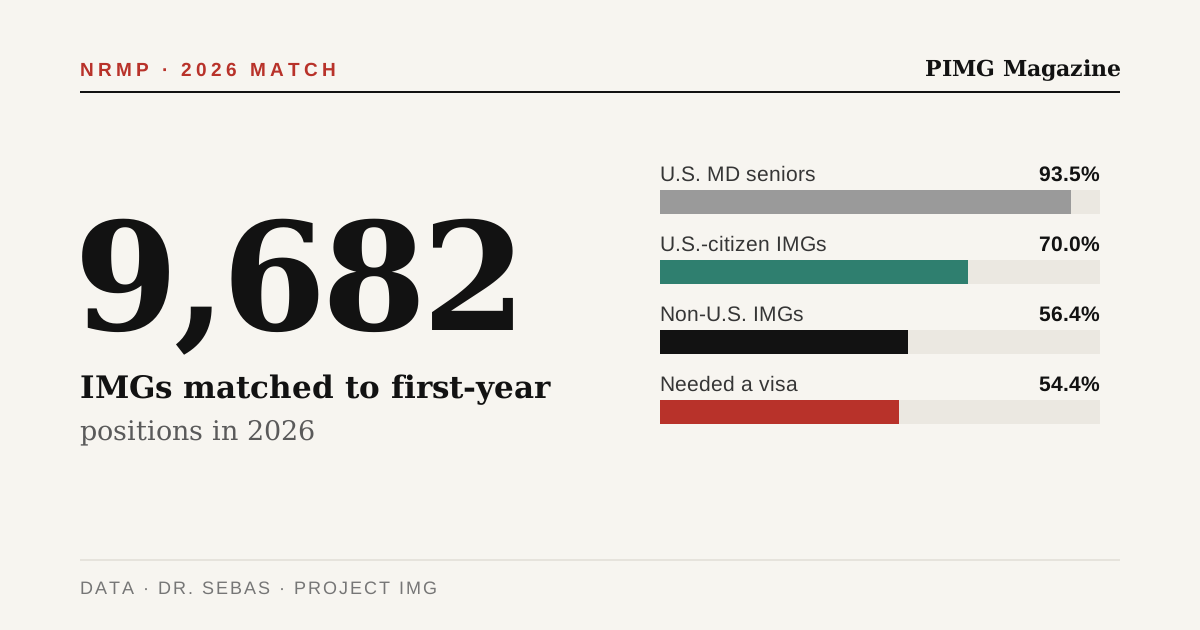
- IMGs matched into 9,682 first-year positions.
- U.S.-citizen IMGs matched at 70.0%, a record high.
- Non-U.S. IMGs who needed a visa matched at 54.4%, a five-year low.
Numbers can scare you or guide you. I prefer the second. Let's read the 2026 Match together, calmly, and turn it into decisions you can actually make.
If you only read one number from 2026, don't read "the IMG match rate." There isn't just one. For the first time, the NRMP split non-U.S.-citizen IMGs by visa status, and the gap between the groups is the story of the year.
The four groups to know
| Group | 2026 PGY-1 match rate | Trend |
|---|---|---|
| U.S. MD seniors | 93.5% | Stable |
| U.S.-citizen IMGs | 70.0% | Highest on record, with fewer applicants |
| Non-U.S. IMGs, no visa needed (permanent residents) | 67.9% | Five-year high |
| Non-U.S. IMGs needing visa sponsorship | 54.4% | Five-year low |
Taken together, non-U.S.-citizen IMGs matched at 56.4%. Their numbers rose to 11,944 active applicants, 479 more than in 2025, while fewer U.S.-citizen IMGs applied.
Who matched in 2026: PGY-1 match rate by applicant group
Same algorithm, very different odds. The visa is now the biggest gap for non-U.S. IMGs.
Why the visa gap matters
In 2026 the difference between needing a visa and not needing one was more than 13 points. Programs were dealing with a lot of uncertainty about H-1B costs that year (see our J-1 vs. H-1B guide). Whatever the cause, the practical lesson is simple: if you need sponsorship, apply to programs that have a track record of sponsoring, and know which visa each one offers.
Who filled the 41,126 first-year (PGY-1) positions
About 1 in 4 first-year spots went to an IMG. Before SOAP, 6.7% were still open.
Where IMGs keep matching
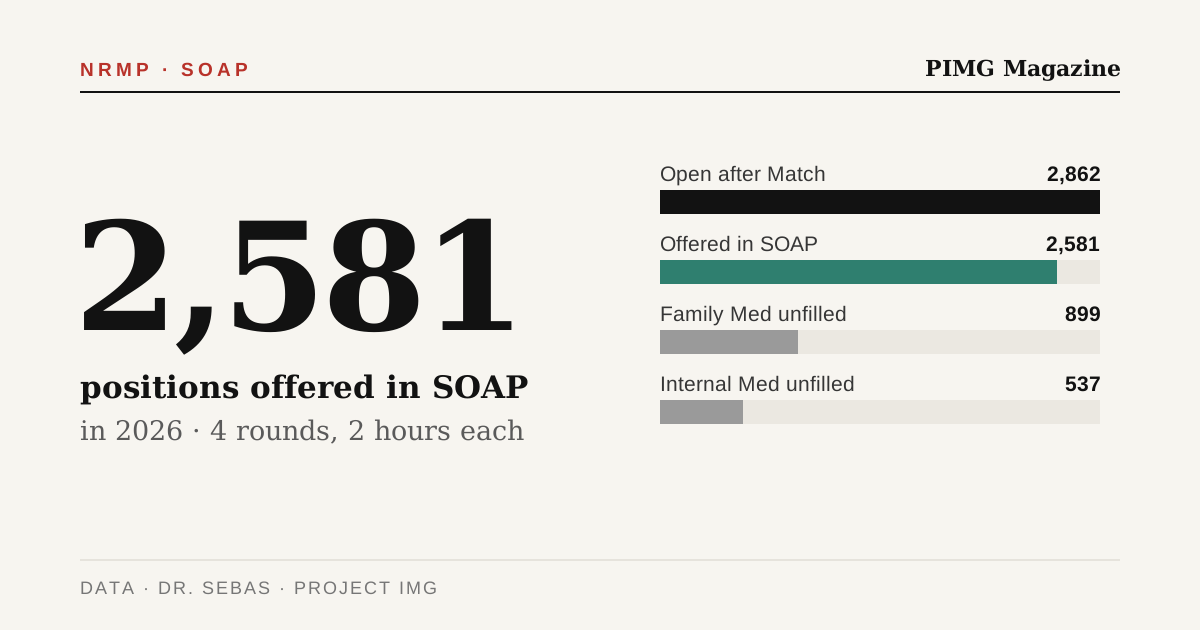
Primary care is still the biggest part of the Match: 20,712 positions in 2026. Psychiatry kept growing, with 2,516 positions and a 97.4% fill rate. After the algorithm, 2,862 positions were still open, and 2,581 of them went to SOAP. That makes a SOAP plan part of a smart strategy, not a sign of failure.
What to do with this in 2027
- Know which group you belong to and use that group's numbers, not an average.
- Sponsorship history matters as much as "IMG-friendly" lists.
- A longer rank list and a SOAP plan are your safety net.
- Read the full 2026 Results and Data report when you build your list.
2025 vs. 2026: one IMG group went up, the other went down
U.S.-citizen IMGs: +2.2 points, the highest on record. Non-U.S. IMGs: −1.6 points, the lowest in five years.
Your step-by-step plan
- Identify your applicant group: U.S. IMG, non-U.S. IMG without visa, or non-U.S. IMG needing a visa.
- Open NRMP Charting Outcomes for your group and specialty.
- Compare your Step 2 CK, USCE and graduation year with people who matched.
- Adjust your list: more target and safety programs if you're below the averages.
- Build a SOAP plan, no matter what.
Non-U.S.-citizen IMG applicants keep growing
Active applicants rose 51.9% between 2022 and 2026, while their match rate fell to 56.4%.
Common mistakes to avoid
- Using the overall IMG rate as your personal odds.
- Ignoring visa sponsorship history when building your list.
- Assuming one bad year means the door is closed.
💡 Dr. Sebas’s tip
Find your own group in the table (U.S. IMG, non-U.S. IMG with or without a visa) and write down only that number. Forget the averages that don't describe you.
Frequently asked questions
Will 2027 look like 2026?
No one knows. Positions keep growing, but visa policy can change quickly. Plan with your group's data and a safety net.
Where can I see the full data?
The NRMP publishes its Results and Data report and Charting Outcomes after each Match.
Do U.S.-citizen IMGs and non-citizens compete for the same spots?
Often yes, but programs consider visa sponsorship, so the two groups have different match rates.