- Two days: Day 1 has 232 multiple-choice questions; Day 2 adds more questions plus 13–14 computer case simulations (CCS).
- The passing score is 200 (since January 2024).
- Programs that sponsor the H-1B usually require Step 3 before they file.
- Most people prepare for 6–8 weeks, with CCS practice from the start.
Step 3 is the exam everybody underestimates. It's not harder than Step 2 CK, but it's different: two long days and a simulation format you've never seen before.
Step 3 is the last exam in the USMLE sequence. It asks whether you can manage patients without supervision. For many IMGs it's also a visa question: most programs that sponsor the H-1B want your Step 3 result before they file.
The format
| Day | What's on it |
|---|---|
| Day 1 – Foundations of Independent Practice | 232 multiple-choice questions in 12 blocks: diagnosis, biostatistics, epidemiology, ethics, patient safety |
| Day 2 – Advanced Clinical Medicine | Multiple-choice questions on management and prognosis, plus 13–14 computer-based case simulations (CCS) |
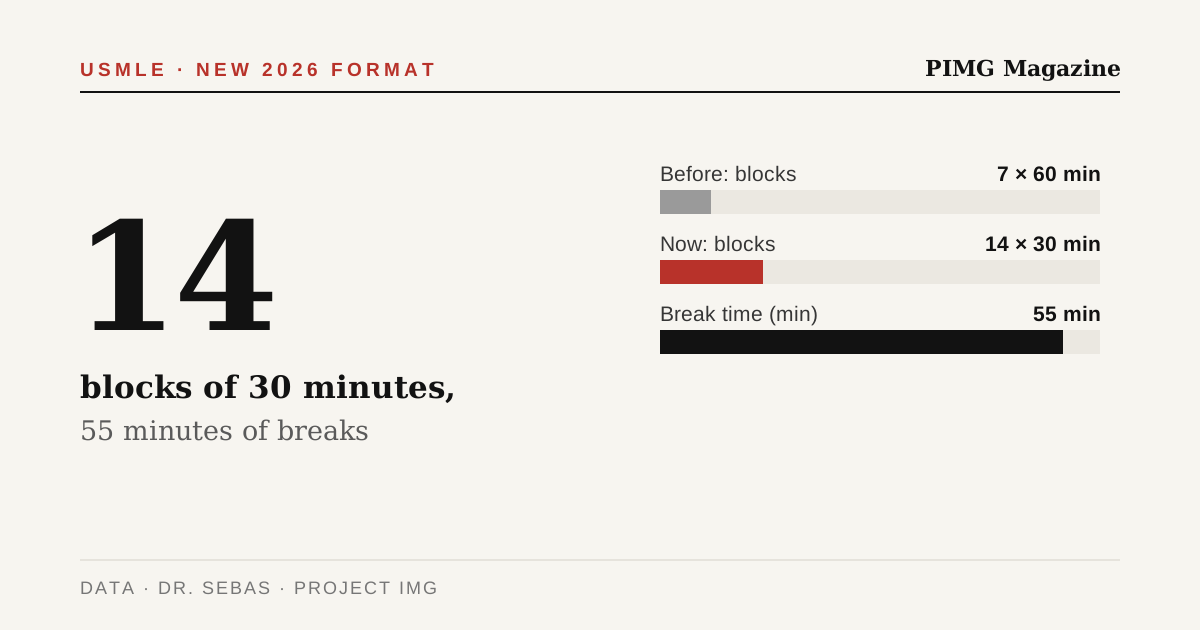
In March 2026, the USMLE moved Step 3 to new test-delivery software with more, shorter blocks. The total number of questions and cases didn't change.
When should an IMG take it?
- If you want an H-1B: as early as possible, ideally before you apply, so programs can count on you.
- If you're on a J-1: many residents take it during intern year. It's needed for a full license.
- Before the Match: a strong score can also make your application stronger, but a low one can hurt. Only take it early if you're ready.
CCS: the part people underprepare for
In the case simulations, you manage a virtual patient in real time: order tests, start treatment, decide where the patient goes, and move the clock. What scores well is doing the right things in the right order, without wasting time on the simulated clock.
CCS rewards a routine. Same first orders, same checks, every case.
✅ Do
- Do CCS cases from week one
- Review biostatistics and ethics, which carry a lot of points
- Take full practice blocks for stamina
- Plan both days, including sleep and food
❌ Don't
- Treat it like a "formality"
- Leave CCS for the last week
- Book it in a heavy rotation month
- Forget the cost (about $955 in 2026)
Your step-by-step plan
- Check your eligibility and apply.
- Plan 6–8 weeks of study around your schedule.
- Start CCS practice in week one.
- Do a question bank in timed blocks, mixing topics.
- Review biostatistics and ethics weekly.
- Simulate both test days before the real exam.
Common mistakes to avoid
- Treating Step 3 as easy.
- Leaving CCS to the end.
- Scheduling it during a heavy rotation.
- Ignoring the second day's fatigue.
💡 Dr. Sebas’s tip
Do two CCS cases every day from the first week. By exam day, your first orders should feel automatic, so your brain is free for the hard decisions.
Frequently asked questions
Do I need Step 3 to match?
No, but it can matter for the H-1B and, for some applicants, for their application.
Can I take the two days far apart?
There are rules about how the two days are scheduled. Check the current USMLE bulletin.
How long until results?
Results usually arrive a few weeks after the exam.